
Manistee Projected and Actual Dates
A projected date is prospective. It reflects the record and calculation in effect when the agency reports it. An actual release date is retrospective and records a completed custody event. At Manistee County Jail, a movement record can show the physical exit time and whether the person entered the community or transferred elsewhere. For an MDOC prisoner, Date Paroled is stronger evidence of leaving secure prison custody than a future eligibility field. A final discharge is later still when parole supervision continues.
Pretrial custody has no sentence endpoint. A detainee may leave after bond, dismissal, a release order, or another case event. Another hold can delay or prevent a community release. After sentencing, the judgment, jail credit, concurrent or consecutive structure, and governing credit rules shape the calculation. The court order supplies legal authority, while the jail or MDOC record supplies the actual movement.
- Earliest Release Date
- The minimum or eligibility point when Parole Board jurisdiction may begin, not a promise of parole.
- Projected Release Date
- A prospective MDOC field that can change and may not be current.
- Date Paroled
- A retrospective date tied to leaving secure prison custody or acquiring parole status.
- Maximum Discharge
- The outside endpoint if parole does not occur, subject to the controlling sentence calculation.
Find Manistee Projected Release Dates
First determine who owns custody. OTIS covers MDOC prisoners, parolees, felony probationers, and recently discharged people within its public display horizon. It does not cover a jail-only Manistee County sentence. The jail and sentencing court are the correct sources for that local calculation. A federal or immigration case uses another agency entirely.
- Read the judgment of sentence and offense date. Note jail credit and whether multiple terms run at the same time or one after another.
- For an MDOC sentence, search OTIS by MDOC number or exact identity and open the full profile.
- Copy Earliest Release Date, Maximum Discharge, and any Projected Release Date exactly as labeled. Do not merge them into one date.
- Determine whether truth in sentencing or a legacy credit regime applies from the offense date and judgment, not from the current year.
- Check current parole status and the Board process. A grant may set a later physical date and can still be affected by case events.
- Confirm the completed exit through Date Paroled, discharge status, a jail movement record, or the source agency.
For a county sentence, contact Manistee County Jail at 231-723-8435 and obtain the court judgment from the 85th District or 19th Circuit record as appropriate. No official Manistee local good-time formula or weekend-release policy was found. Do not import an MDOC prison rule into the jail calculation.
The two local courts serve different parts of the criminal path. The 85th District Court handles misdemeanors and early felony proceedings. The 19th Circuit Court handles felony disposition and sentence. Read the register of actions for the sequence, then obtain the signed judgment when an abbreviation or later amendment is unclear. A jail clerk, court clerk, and MDOC record each answer a different question, so one office’s date should not be treated as the complete calculation.
Michigan Truth in Sentencing
Michigan’s rule is not an 85% formula. For offenses covered by truth in sentencing, a prisoner serves 100% of the judicial minimum term in prison before parole consideration. MDOC states that the rule applies to specified assaultive offenses committed on or after December 15, 1998, and to other covered crimes committed on or after December 15, 2000. Covered prisoners cannot cut that minimum through good-time or disciplinary credits.
Michigan generally uses indeterminate sentences. The judge imposes a minimum, and the law supplies or permits the maximum. Reaching the minimum gives the Parole Board jurisdiction; it does not compel release. The Board may deny parole, set reconsideration, or grant parole for a later date. If parole never occurs, Maximum Discharge is the outside endpoint for the controlling sentence calculation.
The MDOC glossary explains good time, disciplinary credits, disciplinary time, and the date terms used in state records.
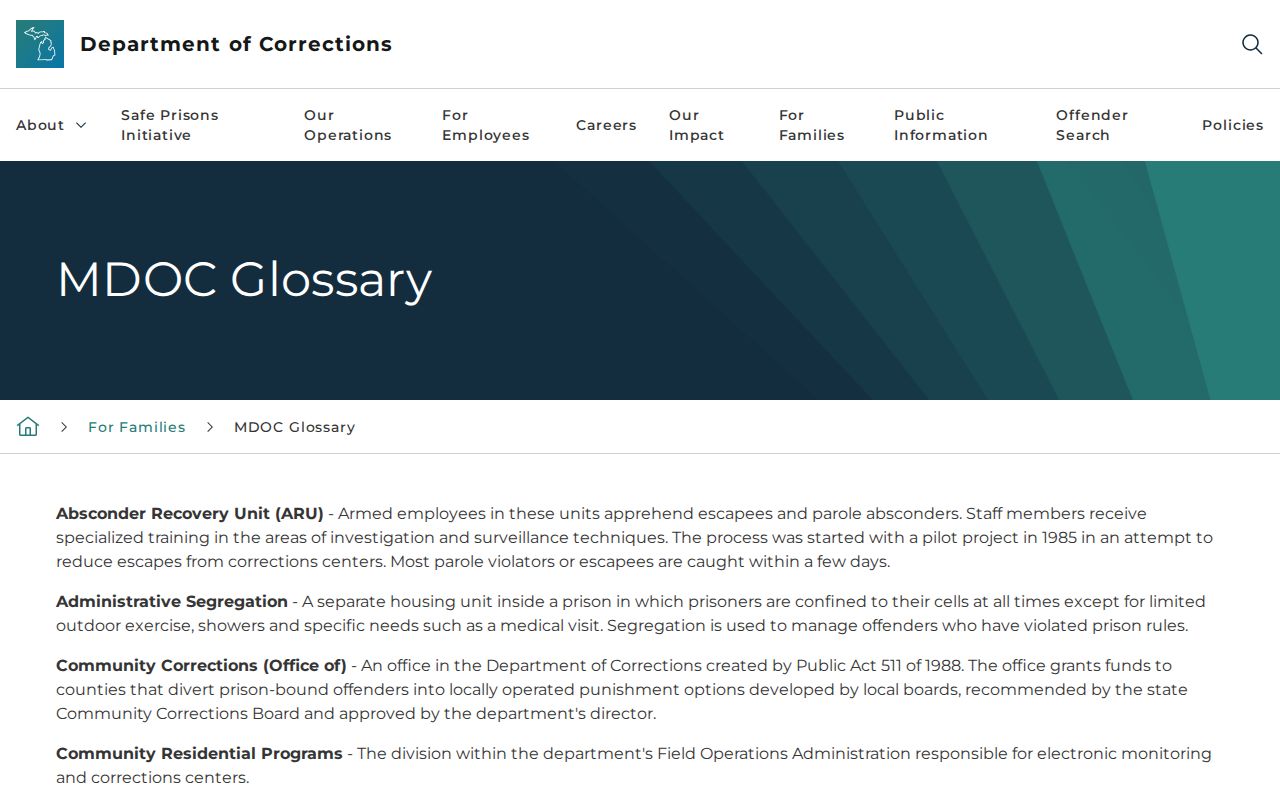
The glossary supports the key distinction: current truth-in-sentencing minimums are not reduced by the legacy credit systems.
Manistee Legacy Release Credits
Older Michigan cases may use rules that depend on the offense date and legal eligibility. MDOC says good time applies to crimes committed before April 1, 1987, with graduated monthly amounts and possible special good time. Eligible offenses after that date but before the relevant truth-in-sentencing cutoff may receive disciplinary credits. The general description is five days per month plus two days for especially good behavior, up to 84 days per year.
MCL 800.33 governs legacy good time and disciplinary credits. Major misconduct can cost credits, and a warden can forfeit earlier credits under the law. Truth-in-sentencing cases instead use disciplinary time under MCL 800.34. That “bad time” is considered by the Parole Board. It is not a simple public calculator that can be subtracted from an OTIS date.
Offense date matters more than the date of the search. A current prisoner may still have an older credit-eligible conviction, while another person with a shorter sentence may be governed by truth in sentencing. The judgment and MDOC calculation must be read together.
Why Manistee Release Dates Change
A projected date can move when the underlying sentence or agency decision changes. Some events alter the calculation itself. Others prevent community release on the expected date even if one custody term ends. Read the new field and the reason together.
| Factor | Effect on the projected or actual date |
|---|---|
| Misconduct | May cost legacy credits or create disciplinary time considered by the Parole Board. |
| Consecutive sentences | One term follows another and can shift the controlling minimum or maximum. |
| Jail credit or correction | A revised credit calculation can move displayed dates. |
| Resentencing or appeal | A new or stayed judgment changes the legal basis for the calculation. |
| Parole decision | A denial delays release; a grant can set a later physical date and may be rescinded. |
| Detainer or transfer | The person can leave one agency yet enter another agency’s custody instead of the community. |
OTIS itself warns that location, status, and projected dates can lag or change. Preserve the date checked. When a profile conflicts with the judgment, a court-derived error should be raised with the sentencing court. A status or supervision concern belongs with MDOC or the listed office.
Manistee Jail Release Calculations
A Manistee County Jail sentence must be kept separate from an MDOC prison sentence. The local jail page publishes no good-time formula, weekend or holiday adjustment, normal release hour, or rule that moves a Sunday date to Friday. The safest method is to obtain the judgment, confirm jail credit and sentence structure, then ask the jail how it applied the calendar to that specific order.
A court order can explain why release is authorized, but it may not show the physical exit time. Jail processing, a second case, another county’s warrant, an MDOC commitment, or an immigration detainer can intervene. Ask whether the event was a community release or a transfer. A release movement record gives stronger proof of the actual exit than a future estimate.
The broader Manistee County release-record search path explains how to pair the court order with the Sheriff’s movement record without mistaking transfer for freedom.
Read Manistee OTIS Date Fields
OTIS is the principal public bridge from an MDOC prison term through parole and recent discharge. Use the MDOC number when available. Compare the name, identity details, conviction county, offenses, and sentence. Then record the status and every date field that appears. Not every profile contains a Projected Release Date, and older records may lack some electronic information.
The official OTIS search shows the inputs and public disclaimer that frame a state-prison date lookup.
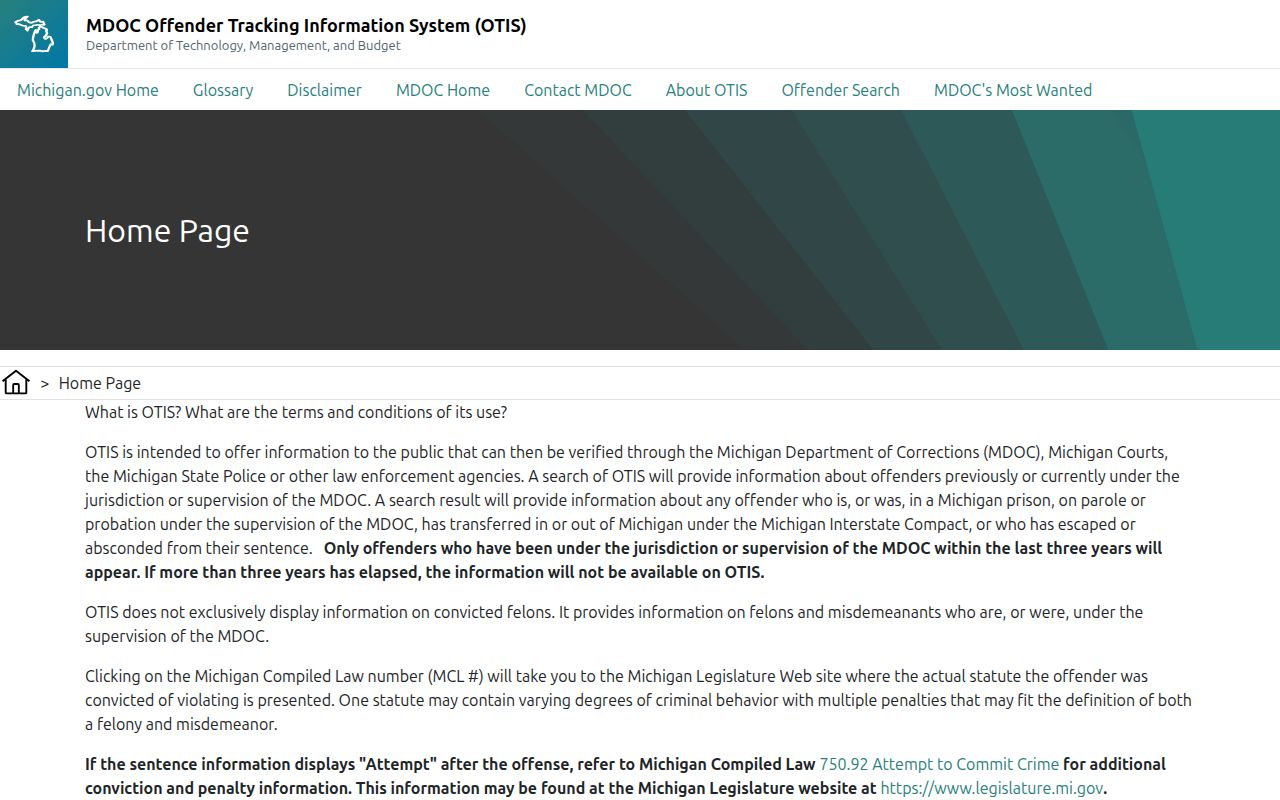
The screen begins an MDOC search only. It cannot calculate a Manistee County Jail sentence or prove the absence of federal or immigration custody.
A profile that later says Date Paroled provides retrospective evidence of leaving secure MDOC custody. If it says discharged, supervision has ended within the public display window. A no-match may reflect a jail-only case, an old discharge, a set-aside, an identifier problem, or exempt information. For older former prisoners, MDOC lists a Records Retention contact for past-prisoner records up to six years post release. That service description is not a claim that all records are destroyed after six years. It also differs from OTIS’s general three-year public display period after supervision discharge. When the public profile is gone, request the exact date or discharge record needed instead of asking the agency to reconstruct a broad history.
OTIS also distinguishes assignment from release. A move from Oaks Correctional Facility to another MDOC institution changes the facility field but does not mean the prisoner entered the community. The same caution applies when an MDOC reception record appears after a person leaves Manistee County Jail. That sequence is a transfer into state custody. Search the sentence county and status before interpreting the change.
Confirm Manistee Release Dates
Confirmation should use a completed event. For MDOC, compare Date Paroled, current status, and discharge information. For the jail, ask for the actual movement date, time, and disposition. Michigan VINE can add an agency-fed release or transfer event when the relevant facility participates, but it supplies no universal retention window and can be affected by source outages.
The Manistee VINELink inmate check describes how to register for custody-change notice. Treat the alert as evidence from the reporting agency, then confirm the exact disposition with that agency. A parole grant, projected date, or alert setup is not final proof by itself.
Parole timing adds one more gap between eligibility and exit. MDOC says consideration generally starts about six months before eligibility or reconsideration. If the Board grants parole, the case moves through the Parole Release Unit, with an ordinarily required interval before physical release. A denial can lead to later reconsideration. There is no authoritative public person-level decisions search that replaces the profile, Board notice available to an authorized participant, or a properly framed records request.
Note: Write down the exact label, agency, custody type, and date checked so a later change does not erase the basis for the conclusion.